TLS Modification
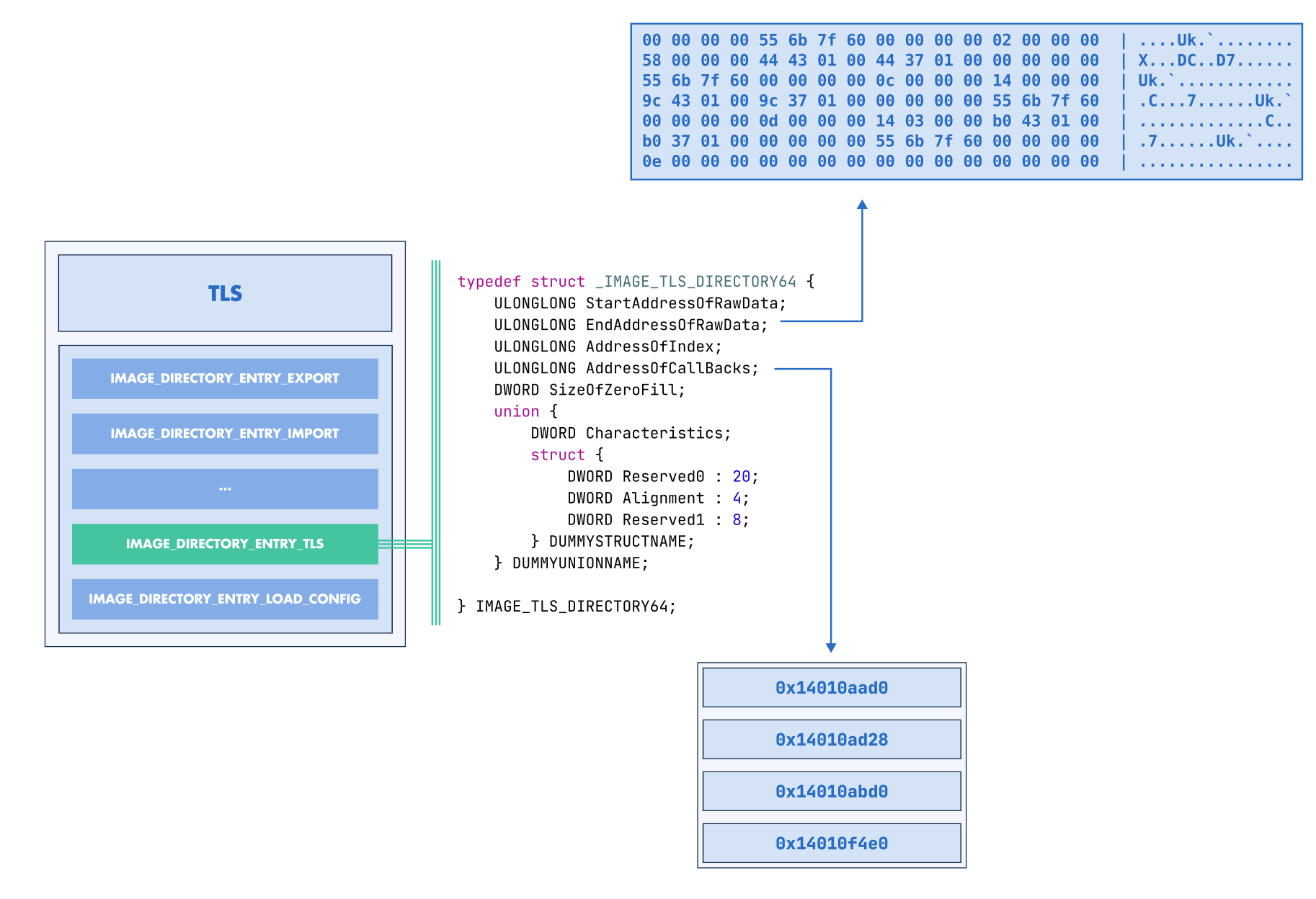
LIEF can be used to modify, create, or remove Thread Local Storage (TLS) information. Relocations Note that LIEF automatically manages the relocations that must be created or removed when modifying the TLS callbacks. If a PE binary does not contain TLS metadata, LIEF can be used to create this structure. First, we can create and initialize a TLS instance: Relocations Similar to TLS callback modifications, LIEF automatically manages relocations. In addition, it automatically initializes (if not set by the user) TLS Modifications
pe: lief.PE.Binary

tls = pe.tls
assert isinstance(tls, lief.PE.TLS)

callbacks: list[int] = tls.callbacks

# Remove the last entry
callbacks.pop()

# Add an address
callbacks.append(0x140001010)

tls.callbacks = callbacks

pe.write("tls_modified.exe")
std::unique_ptr<LIEF::PE::Binary> pe;

TLS* tls = pe->tls();

std::vector<uint64_t> callbacks = tls->callbacks();

// Remove the last entry
callbacks.pop_back();

// Add an address
callbacks.push_back(0x140001010);

tls->callbacks(std::move(callbacks));

pe->write("tls_modified.exe");
let pe: &mut lief::pe::Binary = some_pe;

let mut tls = pe.tls().unwrap();

let mut callbacks: Vec<u64> = tls.callbacks();

// Remove the last entry
callbacks.pop();

// Add an address
callbacks.push(0x140001010);

tls.set_callbacks(&callbacks);

pe.write("tls_modified.exe");
TLS Creation
tls = lief.PE.TLS()

tls.callbacks = [
    0x140001000,
    0x140001010,
]
LIEF::PE::TLS tls;

tls.callbacks(std::vector<uint64_t>{
    0x140001000,
    0x140001010,
});
let mut tls = lief::pe::TLS::new();

tls.set_callbacks(&[0x140001000, 0x140001010]);
pe.tls = tls  # `tls` defined previously

pe.write("tls_demo.exe")
pe->tls(tls); // `tls` defined previously

pe->write("tls_demo.exe");
pe.set_tls(&tls); // `tls` defined previously

pe.write("tls_demo.exe");
AddressOfIndex, which is required when setting up TLS metadata.